
AI firm Bombe correctly predicted London victory surge for the Green Party
AI firm Bombe correctly predicted London victory surge for Zack Polanski's Green Party
An AI-driven model was the first to predict the Green Party's historic surge in support that secured it control of its first London boroughs.
Canary Wharf-based data firm Bombe, the UK's leading audience insight platform, used machine learning to forecast the local election results two months before millions of voters went to the polls last Thursday.
The Greens won the Hackney and Lewisham mayoralties and took control of Hackney, Lewisham and Waltham Forest councils.
All three councils, for years Labour strongholds, had been earmarked by Bombe as ripe for a Green takeover due to its unrivalled understanding of each borough's demographics and the expected behaviour of voters, down to ward level.
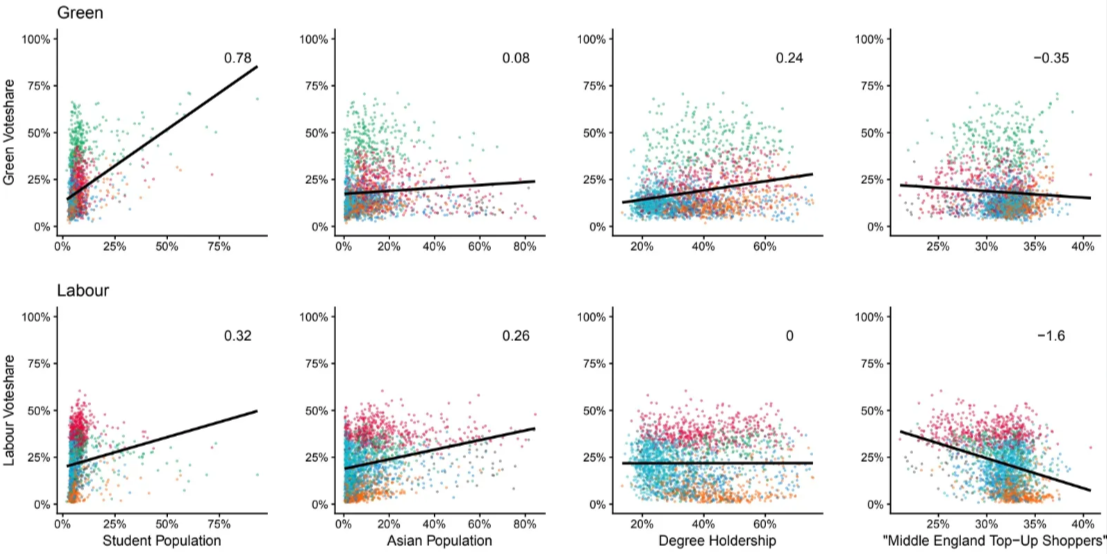 "Graph comparing the Green and Labour vote on a range of key metrics including: Student Population, Asian Population, Degree Holdership and Middle England Top-Up Shoppers"
Bombe also correctly predicted that the Greens would do well in Lambeth and Haringey – where the party came within a few seats of seizing majority control – and in Brent, where Labour was ousted.
In addition, Bombe forecast that the Tories would do better than expected in Bexley and Bromley, holding off Reform to retain control in both boroughs, but that Havering was at risk from Reform, which now runs the town hall.
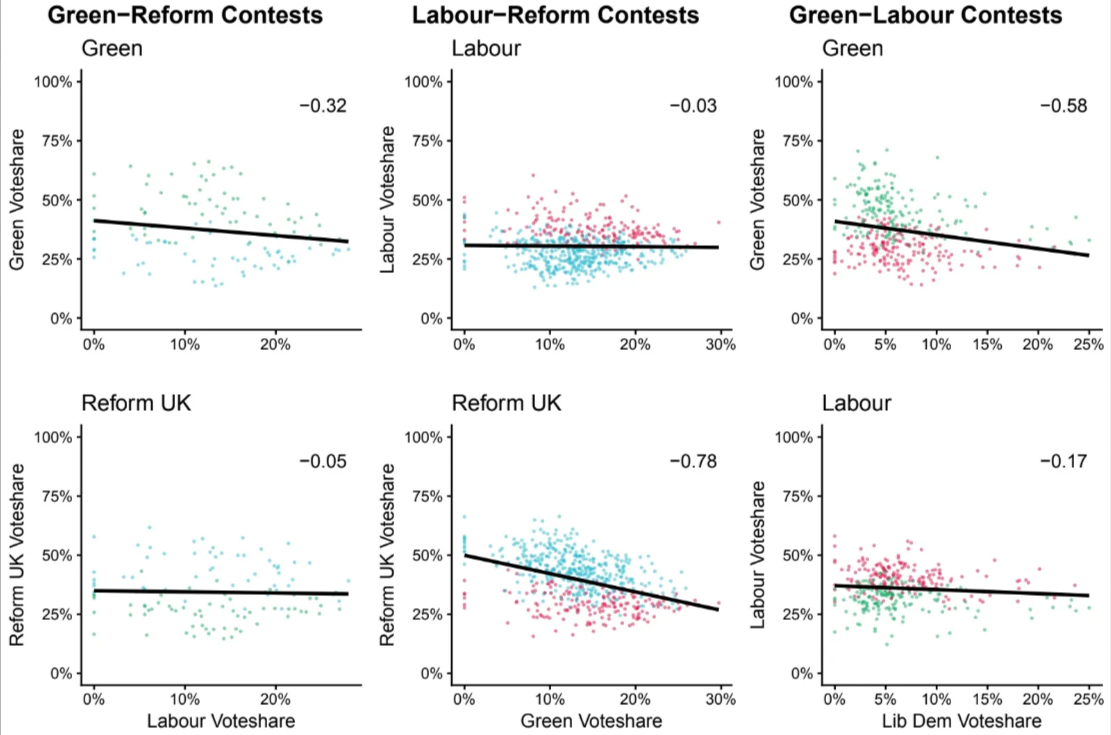 "Graph comparing how Reform, Labour and the Greens traded votes against each other in directly contested wards, including: Labour-Reform contests, Green-Reform contests and Green-Labour contests"
Mike Joslin, co-founder and CEO of Bombe, said:
"Our pioneering machine learning technology called three historic Green victories in inner London months before they happened. Hackney, Lewisham and Waltham Forest - Labour strongholds for decades - were all in our model as Green targets well in advance." "The Greens taking control of their first London boroughs is a fundamental shift in the political landscape of the capital. Our technology saw it coming because it understands how communities are changing from the ground up, ward by ward."
The results highlight Bombe's ability to use demographics and real-world data rather than traditional opinion polls to predict surges in political support.
Its model correctly forecast that Reform and the Green party, despite being at opposite ends of the political spectrum, would both make big gains from Sir Keir Starmer's Labour party.
Bombe first predicted in March that Reform could pick up more than 1,500 seats and control of 17 more English councils.
Then, in an update 10 days before polling day, it refined its prediction to say that Reform would gain control of 14 councils – which is exactly what happened.
Bombe got its predictions right by dividing the population into nine demographic and seven commercial groups (or "personas") on a ward-by-ward basis - using "real world" behaviour over the last four years to inform its analysis.
This differs to traditional polling, which typically uses survey responses from 1,000 or more people to estimate how the wider electorate will vote.
Bombe established early on that Reform and the Greens would perform like "political insurgents", with their votes concentrating in different parts of the country. In general, Reform performed best outside of London while the Greens performed best in inner London.
Bombe's post-election analysis found that Labour had a higher vote share among "high demanding, high income" voters than the Greens. These are older millennials and early Gen X, typically people in their 30s to 50s who are high earners who spend freely but are not easily impressed.
 "Graph showing the Green vote across Bombe's range of commercial consumer groups"
Bombe found that Reform was far more likely than the Greens to attract the lowest-paid earners and "steady strivers", people over 40 who have worked in the same (or a similar) average-wage job all their life.
Reform did best among skilled manual workers, while Labour did poorly, Bombe established – despite the Prime Minister's frequent narrative that his father was a tool-maker.
The Greens polled highest among urban dwellers (people who live in cities and are likely to have liberal values), career starters (young people in education or their first job) and the student population.
Reform and the Greens both won votes from "aspirational renters" who want to own their own home. The Greens also picked up votes from "urban dwellers" (people who live city lives). Reform won support from "low-paid workers".
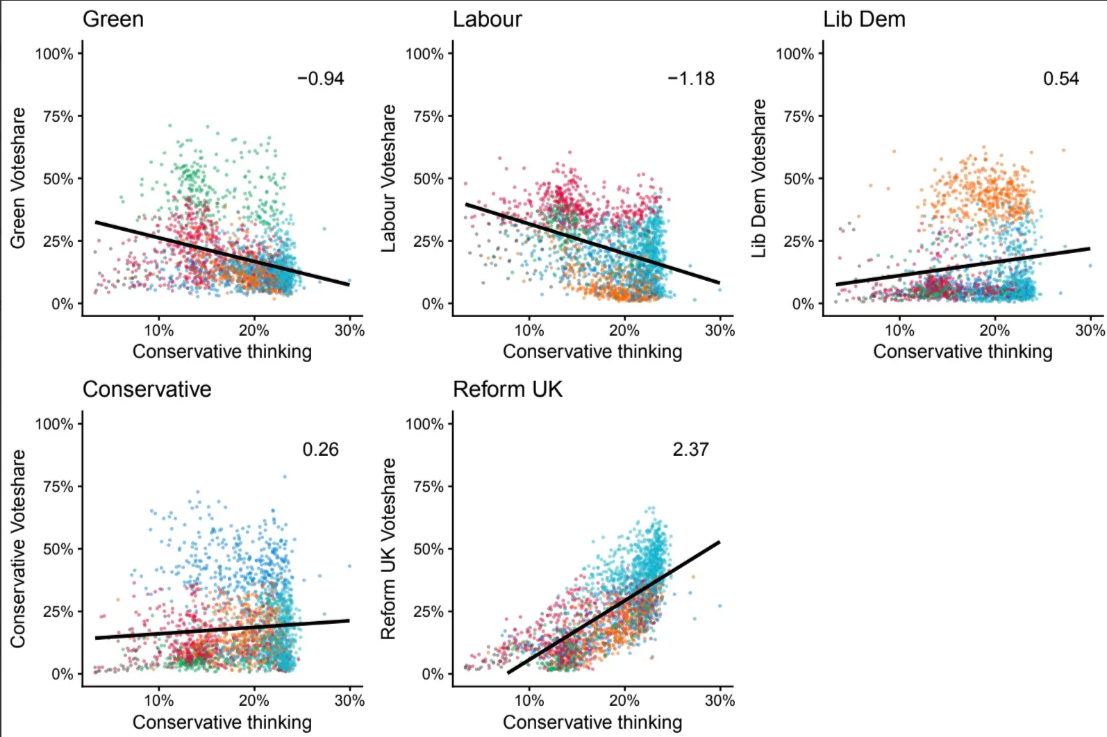 "Graph comparing all five parties against the "Conservative Thinking" consumer group, showing how this commercial persona predicted vote share across the political spectrum"
Prior to the local elections, Bombe's pioneering "results-based modelling" technique had accurately predicted the results of 17 out of the last 20 by-election results, including the Green party victory in Gorton and Denton in February.
For more information or further comment, please contact:
George Stenner: george.stenner@bombe.io
About Bombe
In 2002, the Oakland Athletics baseball team, in an approach dubbed "Moneyball" in the book and Hollywood film, used machine learning to work out why they were winning or losing games.
Bombe was founded to pioneer result-based prediction in consumer insight, something nobody else has done until now.
Bombe has created a model of the UK that works out what motivates people to do things like vote and buy things.
Bombe's personas are based on what drives people to behave in certain ways.
Using machine learning, this is predicted down to postcode level. This is augmented with transport data, weather data, company data and much more.
Bombe's models can accurately predict things like supermarket sales, street level store sales, online sales by postcode, social issues and elections.
Want to learn more about Bombe?
See how Bombe helps brands understand their customers with AI-powered market research.
Request a demo